

A sector we understand
Keep specialist engineering work moving without losing control.
We understand both the everyday business systems and the specialist applications, licences, files and project environments engineering teams depend on.
Short application. Human review. No access required.
Applications are open for future delivery windows
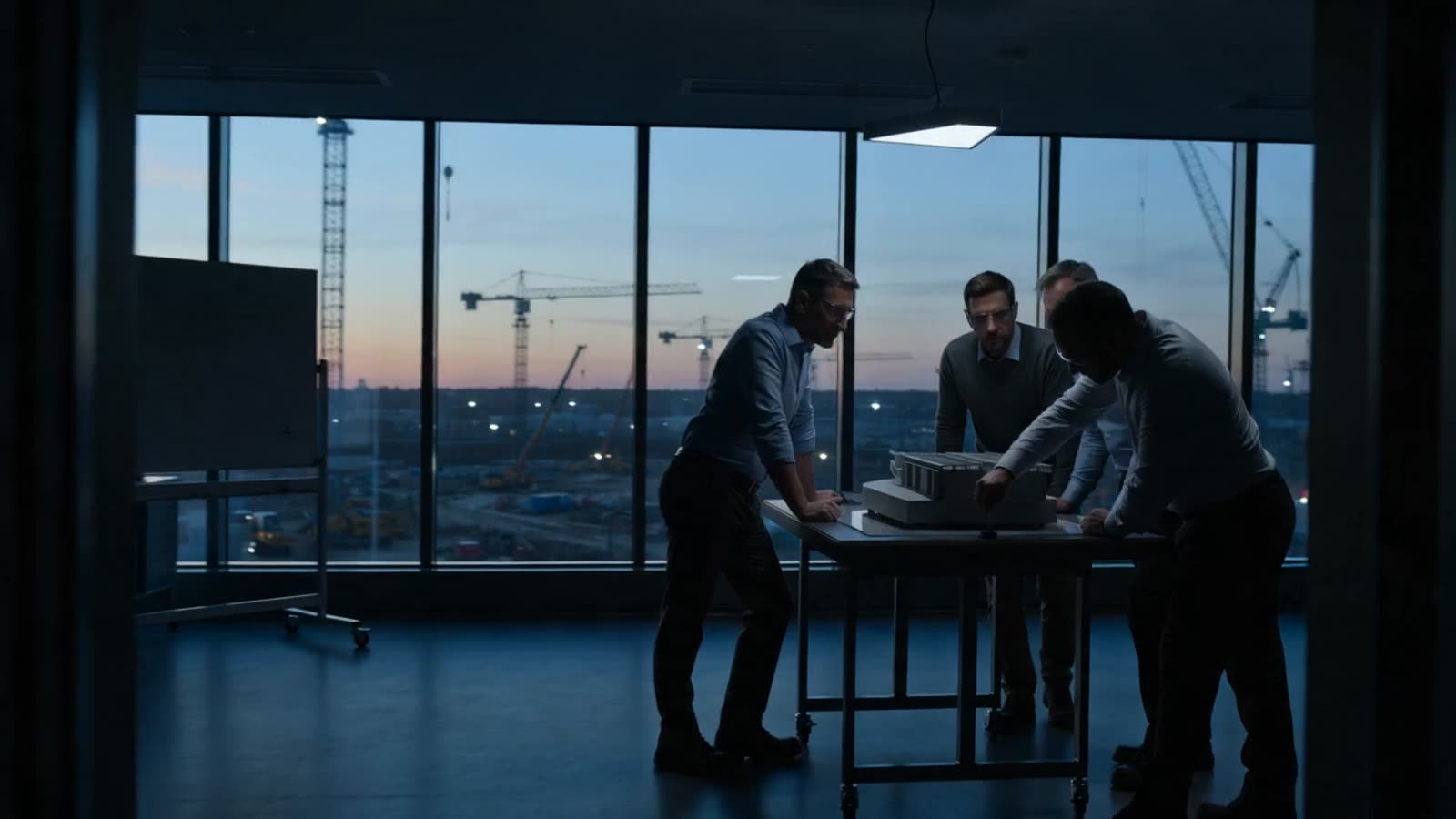
See the operating change
Watch sector reality meet practical delivery.
Transcript
Silent film. A specialist engineering model moves from remote access through a controlled licence and into multidisciplinary project work.
What this looks like in practice
You may recognise the pattern before you know its name.
- Remote engineers cannot reliably reach floating licences or specialist systems.
- Teams use different application versions or undocumented workarounds.
- Large project files sit across unmanaged or poorly connected locations.
- Security, suppliers and onboarding delay legitimate engineering work.
Example: A licence that works only in the office
A multidisciplinary team may depend on a floating specialist application that remote engineers reach through an undocumented workaround. Blue Hybrid could map the licence, network, identity, deployment and supplier dependencies before designing a controlled access route.
Apply for fit reviewTangible outputs
What you leave with, and what it changes.
Choose a working sheet to follow its line into the operating consequence.
The Think.Go. method
Strategy stays connected to delivery.
- Think
Understand applications, licence models, project data, users, suppliers and constraints.
- Shape
Design the technical and operational model around engineering delivery.
- Go
Deploy, test, document and support the system with specialist partners involved where needed.
Useful questions
Before we start.
Which specialist applications can be considered?
The brief identifies environments including PowerFactory, EPLAN, Engineering Base, XGSLab, CDEGS, AutoCAD, Revit, Tekla Tedds and ProjectWise, subject to confirmed scope and capability.
Can you work with application vendors?
Yes. Vendor coordination, procurement, licensing, deployment and support boundaries can be part of the delivery model.
How do you avoid security blocking engineers?
Controls should be designed against the actual application, file, licence and remote-work requirement, then tested with representative users.
Bring us the problem. We will work out the practical next move.
Applications stay open for future delivery windows.
What happens next
- Share the problem, timing and intended outcome
- We review mutual fit and delivery capacity
- If aligned, we invite the next conversation